Article: Does Soap With a Handle Reduce Waste? An Honest Look
Does Soap With a Handle Reduce Waste? An Honest Look
Last Updated: October 23, 2026
Quick Summary
A soap with handle reduces waste mainly by cutting dropped bars and leftover slivers, since you can hold and rub the bar down to the last bit. It also has no plastic clip or separate attachment to discard, though it does not change how the soap is packaged.
- A dropped bar cracks, skids, and often gets binned because it looks dirty.
- A plain bar wears down to a thin sliver that sticks to the dish and never gets used.
- Bar formats cut packaging waste sharply versus a bottle and pump.
- A soap-formed handle dissolves with the bar, leaving zero separate waste.
- Store the bar on a draining dish, handle up, so it stays firm and lasts longer.
Table of Contents
- Does Soap With a Handle Actually Reduce Waste?
- Bar Soap vs Liquid Soap Waste: A Like-for-Like Comparison
- How to Stop Dropping Soap in the Shower
- Handle Materials, Durability, and End-of-Life Disposal
- How to Use Soap Slivers (and Every Last Bit of the Bar)
- How to Use a Handled Soap Bar Efficiently
- What the Waste-Reduction Claims Get Right and Where They Stop
- Frequently Asked Questions
Does Soap With a Handle Actually Reduce Waste?
A soap with handle design changes how you hold and store a bar, and that small change has a real effect on how much of the bar you actually use.
Here is the honest version: a handle helps, but it is not magic. It reduces waste in two specific ways, and it does nothing for waste in a few others.
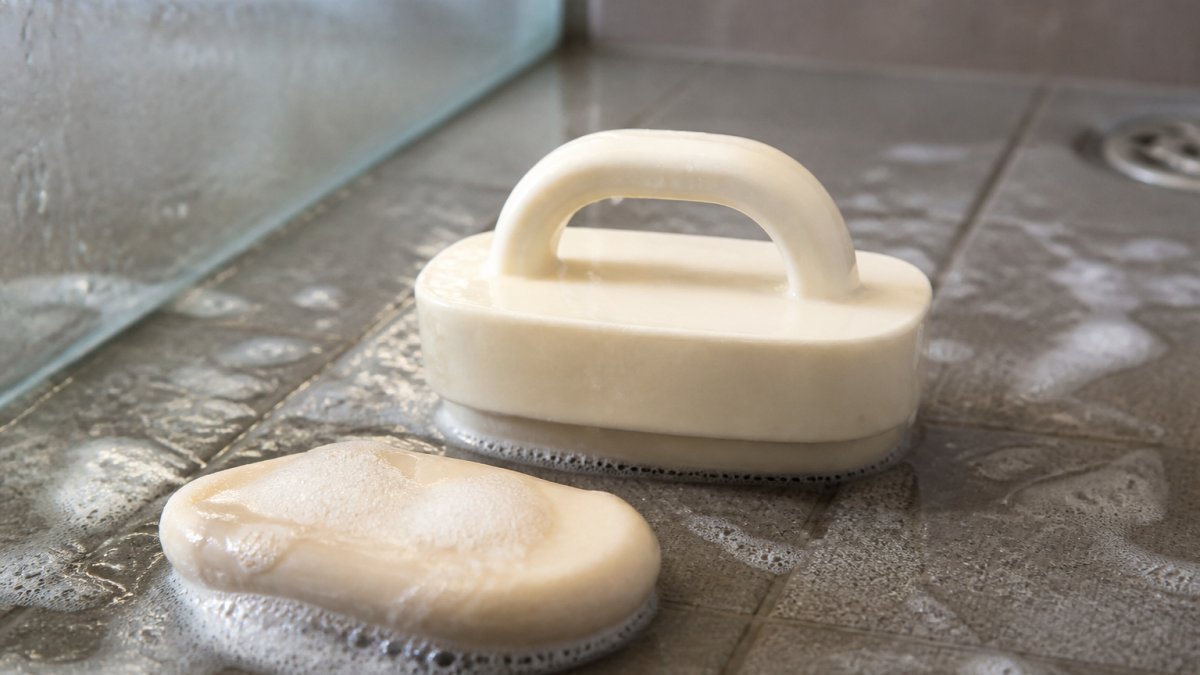
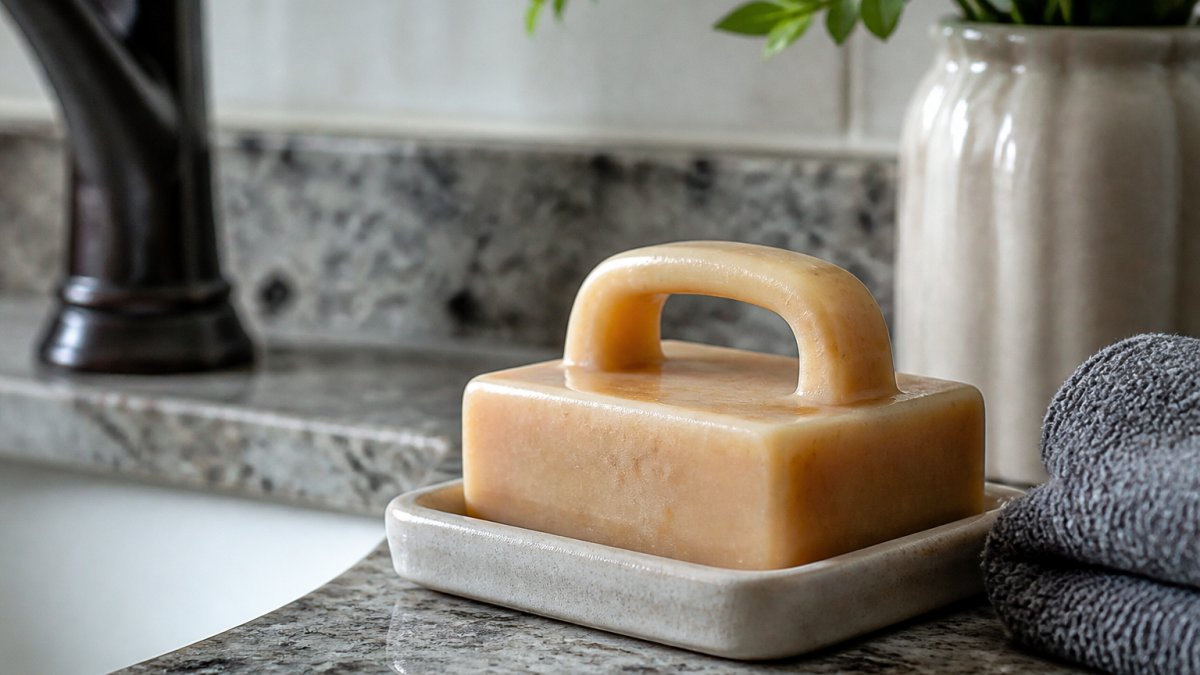
Soap with handle is a solid bar where the handle is part of the soap, not a separate attachment. That distinction matters more than most buyers realise.
The Two Ways a Handle Cuts Waste
Most soap waste comes from two places, and a handle addresses both.
1. Fewer dropped bars. A wet bar slips out of a hand easily, especially for kids or anyone with a weaker grip.
2. Less soap left behind. A plain bar wears down to a thin sliver that sticks to the dish and never gets used.
Those are the real mechanics. Everything else in the sustainability conversation is secondary.
Bar Soap vs Liquid Soap Waste: A Like-for-Like Comparison
Solid soap usually wins on packaging waste, but the gap depends on how you buy and store it. The fair way to compare is per wash, not per product, and the comparison should separate packaging waste from product waste. Below is a like-for-like breakdown of plain bar soap, soap with a handle, and liquid soap in a bottle.
The per-wash waste model
To compare fairly, count four things for each format:
- Packaging per wash. How much wrap or bottle is used up to deliver one wash.
- Product lost before use. Soap that is dropped, cracked, abandoned as a sliver, or left as residue in a bottle.
- Water and energy per wash. How much water and heating the format tends to use.
- Replacement frequency. How often you buy a new unit, which drives packaging and transport.
Side-by-side comparison
| Factor | Plain bar soap | Soap with handle | Liquid soap in a bottle |
|---|---|---|---|
| Primary packaging | Paper wrap or none | Paper wrap or none | Plastic bottle and pump |
| Packaging per wash | Very low | Very low | Higher; pump and bottle per unit |
| Product waste at end of life | Sliver often discarded | Bar used to the last bit | Pump leaves residue in bottle |
| Drop-and-discard risk | Higher | Lower | Not applicable |
| Water used per wash | Low | Low | Often higher |
| Refill option | Buy a new bar | Buy a new bar | Refill pouch or bulk |
| Replacement frequency | Moderate | Moderate | Higher if pump or bottle is replaced each time |
What the model shows
- Packaging: Both bar formats cut packaging waste sharply versus a bottle and pump. A paper-wrapped bar produces far less plastic per wash than a bottled liquid soap. A bottle is not automatically landfill, since many are recyclable and refill pouches cut plastic per wash, but the bar formats start from a lower packaging baseline.
- Product waste: This is where the handle earns its place. A plain bar wears down to a thin sliver that sticks to the dish and is often binned. A handled bar can be held and rubbed down to the end, so less soap is lost. Liquid soap loses product as residue in the bottle and pump, which is hard to use up.
- Water and energy: Bar soap tends to use less water per wash because you wet the bar briefly and lather in your hands. Liquid soap often encourages longer running water while you pump and lather.
The honest limits of the comparison
The evidence behind these claims is mostly practical rather than lab-tested. Results depend on how you store the bar, how often you drop it, and whether you actually use the sliver. A household that already uses every sliver of a plain bar and stores it dry will see a smaller handle benefit than a household that bins cracked bars. The comparison is a fair guide to direction, not a precise per-household number.
How to Stop Dropping Soap in the Shower
The simplest fix for dropping soap is to give your hand a grip point, then keep the bar dry between uses. A bar that sits in water softens, and soft soap slips.
Try these habits:
- Keep the bar on a draining dish, not a flat wet ledge
- Wet the bar briefly, lather, then set it back to drain
- Use a bar sized to your hand, not an oversized block
A common mistake is storing the bar where shower spray hits it all day. That single habit softens more soap than any drop does.
Handle Materials, Durability, and End-of-Life Disposal
A handle only reduces waste if the handle itself does not become waste. This is where material choice decides everything, and it is the question most soap comparisons skip. Below is a practical breakdown of the handle types you are likely to encounter, how long each realistically lasts, how each fails, and what happens to it at end of life.
1. Soap-formed handles (the handle is the bar)
The handle is molded from the same soap mass as the bar, so it dissolves as you wash. There is no separate component, no clip, no ring, and no end-of-life item to discard. When the bar is gone, the handle is gone.
- Durability: Limited by the bar itself. A soap-formed handle is as strong as the soap around it, so it can snap if the bar is dropped hard or left soaking. Keeping the bar dry between uses is the main way to preserve it.
- Failure mode: The handle can soften and deform if stored in standing water, and a thin handle can break under a hard grip. A bar sized to your hand and stored on a draining dish avoids most of this.
- End of life: Zero separate waste. Any leftover soap can be pressed into a new bar or used in a soap bag.
2. Reusable plastic or silicone grips
These are separate grips that hold a standard bar. They are designed to be reused across many bars, so their waste footprint depends entirely on how many bars each grip outlives.
- Durability: A well-made silicone or rigid plastic grip can last months to years. A cheap grip with thin clips or a brittle hinge often snaps within weeks.
- Failure mode: Clips break, hinges crack, and suction cups lose grip. Once the grip fails, it becomes a small plastic item that most curbside programs will not accept.
- End of life: Generally not recyclable in curbside bins because of mixed materials and small size. Silicone is not widely recyclable either. The waste is small per unit, but it is additional waste that a soap-formed handle avoids entirely.
3. Metal or wooden holders
These are durable, repairable, and often long-lived, but they carry their own care and disposal story.
- Durability: Stainless steel and coated wire last years. Untreated wood can crack, split, or grow mildew if it stays wet.
- Failure mode: Metal can rust at welds or joints; wood can warp and harbor bacteria in cracks. Both need drying between uses.
- End of life: Metal is recyclable in most curbside programs. Untreated wood may be compostable depending on local rules; painted or treated wood usually is not.
The durability test that matters
Before buying any handled bar or grip, ask three questions:
- Is the handle part of the soap or a separate piece? A soap-formed handle has no end-of-life waste; a separate piece does.
- What is the realistic lifespan? A grip that lasts years is a different waste proposition from one that snaps in a month.
- Can it be recycled or composted where you live? Check your local program before assuming a plastic or silicone grip will be recycled.
A common pattern is that the cheapest separate grip is also the shortest-lived, which makes it the worst option for waste. The soap-formed handle is the only design with no separate end-of-life item, which is why it is the cleanest answer to the handle-waste question.
How to Use Soap Slivers (and Every Last Bit of the Bar)
Soap slivers are the last thin pieces of a bar, and most households throw them out. You can use them instead.
- Press slivers into a new bar. Soften the sliver in water and press it onto a fresh bar. It bonds as it dries.
- Collect them in a soap bag. A mesh bag holds scraps together so you can lather from the whole bundle.
- Melt and remould. Small batches of slivers can be gently melted and pressed into a new shape.
With a handled bar, this problem shrinks on its own. You can hold the bar down to the last bit, so there is far less sliver to salvage in the first place. That is the quiet advantage of the design.
How to Use a Handled Soap Bar Efficiently
A handled bar works best when you treat the handle as a grip, not a hook. Hold it in your palm, lather, then let it drain.
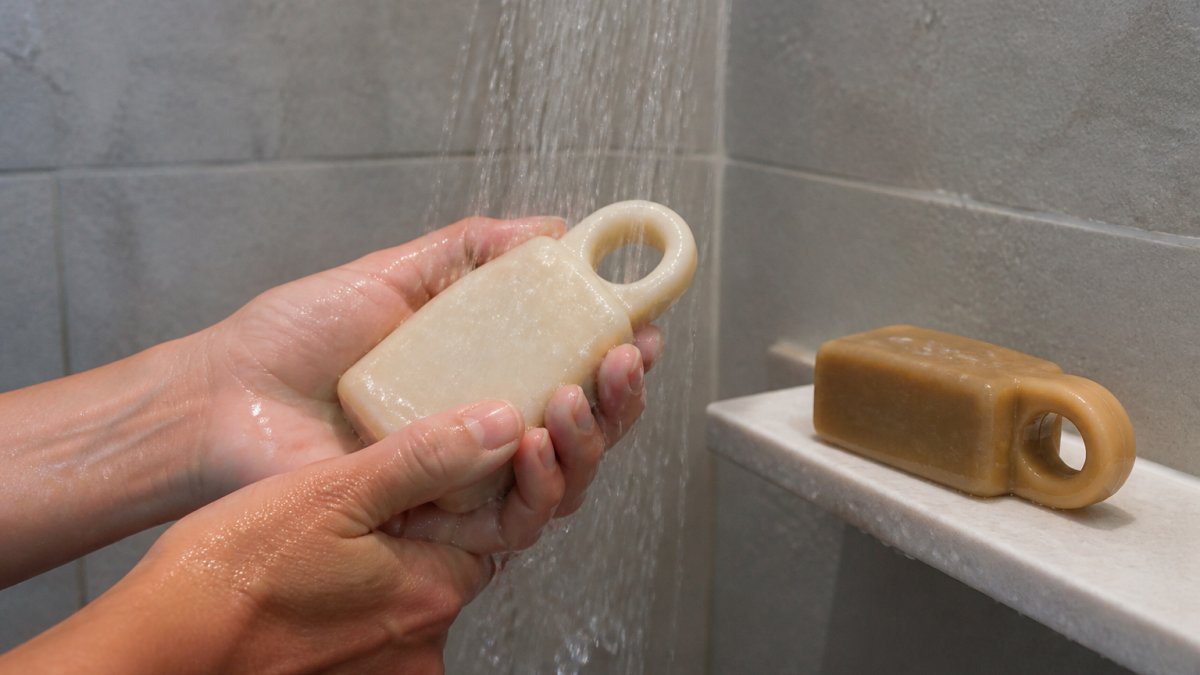
Follow this routine:
- Wet your hands and the bar briefly.
- Hold the handle between thumb and fingers.
- Rub the bar between your palms to build lather.
- Set the bar on a draining dish, handle up.
- Rinse and store dry between washes.
Expected result: the bar stays firm, lasts longer, and you never fish for a slippery piece at the bottom of the tub.
What the Waste-Reduction Claims Get Right and Where They Stop
Handled soap does reduce waste, but the claims deserve a clear boundary.
What holds up:
- Less product lost to drops and cracks
- No plastic clip or attachment to discard
- The whole bar gets used, down to the end
Where the claims stop:
- A handle does not change how the soap is packaged, so check the wrap
- It does not make soap last forever; a bar still wears down with use
- It does not replace good storage habits
The evidence behind waste-reduction claims is mostly practical, not lab-tested. You can see it in your own bathroom: fewer slivers in the bin, fewer bars bought per year.
A handled bar also helps people who struggle with grip, including kids and adults with reduced hand strength. That usability gain is real, and it happens to cut waste at the same time.
Frequently Asked Questions
Does soap with a handle reduce waste compared with a regular bar?
It can, but the gain comes from two specific places rather than the handle itself. First, a built-in handle keeps the bar out of standing water, so it dissolves more slowly and lasts longer. Second, you can use the bar down to the very end without it slipping away, so fewer slivers end up in the bin. A regular bar in a draining dish can achieve similar results, but a handle makes both habits easier to keep.
Is bar soap less wasteful than liquid soap?
In most households, yes. Liquid soap carries a plastic bottle, a pump, and the water weight of the product itself, all of which affect packaging waste, transport, and carbon emissions. Bar soap typically ships as a wrapped solid with far less plastic. The gap narrows if you buy refill pouches or a large refillable container, and it widens if the bottled soap is diluted or heavily packaged. Storage and shelf life also favor bars.
How do I stop dropping soap in the shower?
Grip fails when the bar is wet, small, and rounded. A handle gives your fingers something to hold that does not shrink as the bar wears down, which matters for kids and for anyone with reduced grip strength. If you use a standard bar, keep it dry between uses, store it on a draining dish rather than the shower floor, and rotate two bars so each one dries fully. A textured or flatter bar shape also helps.
Can you use the last sliver of bar soap?
Yes, and doing so is one of the simplest waste reductions available. Press the sliver onto a new bar while both are slightly damp, and it will fuse as they dry. You can also collect slivers in a small mesh bag and use it as a scrubber, or melt them down into a new bar. A handled bar removes the usual reason people give up on slivers, which is that they are too small and slippery to hold.
Waste in the bathroom is mostly a design problem, and most soap is designed to slip. The Soap Handler makes bars with a built-in handle formed from all-natural soap, produced in small batches by a woman-run workshop in India, with no synthetic attachments and no plastic parts. You use every last bit, and nothing gets left in the dish. Shop the Handlers and see how much soap you stop throwing away.