How to Buy Sustainable Soap Bars Online
Last Updated: October 26, 2026
Quick Summary
To buy sustainable soap bars online, check four things before ordering: plant-based ingredients with named oils and butters, small-batch production you can trace to a named workshop, plastic-free wrapping and shipping packaging, and a bar designed to last until it is fully used. Verify claims like vegan, organic or palm-oil free against a named certifier or full ingredient list rather than trusting front-label words.
- Natural and eco-friendly are not regulated terms, so vague green claims without evidence count as misleading.
- Scan ingredient lists for palm, palmitate, stearate and sodium palm kernelate when a bar claims to be palm oil free.
- Check that tape, labels and mailers are plastic-free, not just the bar wrap.
- Let bars drain on a ridged tray and rotate two bars so each dries fully between uses.
- Choose a mild, unfragranced bar with a built-in handle for children or anyone with reduced grip strength.
Table of Contents
- What Makes a Soap Bar Sustainable
- A Side-by-Side Look at Sustainability Claims
- Why Zero Waste Soap Bars Beat Bottled Alternatives
- Plastic-Free Soap Bars: What to Check Before You Buy
- How to Make Soap Bars Last Longer
- Matching a Bar to Your Skin Type and Use Case
- Shop the Handlers for a Slip-Free, Waste-Free Wash
- Frequently Asked Questions
What Makes a Soap Bar Sustainable
A sustainable soap bar is one made from responsibly sourced plant oils and butters, produced in small batches, and sold without plastic packaging. It also needs to last long enough that you actually use the whole bar instead of tossing a soggy sliver.
That definition matters more than any label on the wrapper. The UK Competition and Markets Authority guidance on environmental claims makes clear that vague green claims without evidence are treated as misleading, which is why the checklist below focuses on what you can verify rather than what the front of the box says.
At The Soap Handler, we build our bars around one idea: a soap you can hold properly gets used to the very last bit. That single design choice does more for waste reduction than most packaging claims.
Four things separate a genuinely sustainable bar from a greenwashed one:
- Ingredient base: plant oils and natural butters such as cocoa butter, rather than synthetic detergents and fillers
- Production scale: small-batch and handmade methods you can trace to a named workshop
- Packaging: plastic-free, recyclable or compostable wrapping, with no hidden plastic in the shipping stage
- Longevity: a bar that survives daily use in a wet shower instead of dissolving in a week
Get all four right and you have a bar worth buying. Miss any one and you are paying a premium for a word.
A Side-by-Side Look at Sustainability Claims
Most product pages make the same three promises: natural, vegan, plastic-free. The difference is whether they show their working. Rather than trusting a badge, compare bars using the same four criteria: ingredient sourcing, packaging materials, production practices, and third-party verification. Here is how to read the claims you will actually encounter when you buy sustainable soap bars online.
| Claim on the listing | What it should mean | What to check before buying |
|---|---|---|
| "All-natural" | Plant-based oils and butters, no synthetic fragrance | Full ingredient list, not just the front label; look for named oils such as olive, coconut, or shea |
| "Vegan and cruelty-free" | No animal-derived ingredients, no animal testing | A named certification such as the Leaping Bunny or Vegan Society trademark, or a clear signed statement from the maker |
| "Plastic-free" | No plastic in the bar wrap or the outer packaging | Packaging description covering both wrap and shipping; ask whether tape, labels, and mailers are plastic-free |
| "Palm oil free" | No palm-derived ingredients in the recipe | Ingredient list checked for palm, palmitate, stearate, and sodium palm kernelate |
| "Handmade" | Small-batch production, often cold process | Workshop details, batch sizes, who makes it; a named maker or workshop is a stronger signal than an anonymous trading name |
| "Zero waste" | The whole bar gets used, packaging included | Whether the design supports full use, not just the wrap; a bar that dissolves into an unusable sliver is not zero waste in practice |
| "Organic" | Ingredients grown without synthetic pesticides | A certification such as USDA Organic or COSMOS, with a certifying body named on the listing |
| "Sustainably sourced palm oil" | Palm oil from certified responsible plantations | RSPO certification mentioned by name, or a clear statement of the sourcing policy |
The pattern to notice: every strong claim points to something checkable. A listing that says "eco-friendly" five times but never names an ingredient, a certification or a workshop is telling you nothing.
One claim deserves special attention. Palm oil appears in a huge share of commercial soap because it is cheap and lathers well, and its production is linked to deforestation.
Certifications are only useful if you can trace them. A vegan badge from an unknown body is weaker than a statement from the maker that names the certifying organization.
Our advice: pick the two claims that matter most to you, usually ingredient transparency and packaging, and verify those properly. Chasing every badge at once is how shoppers end up paying more for less.
Why Zero Waste Soap Bars Beat Bottled Alternatives
A bar of soap is close to the lowest-waste format personal care offers. There is no bottle, no pump, no water shipped around the country, and nothing left over when you finish.
Zero waste soap bars also travel better. A solid bar weighs little, needs no leak-proofing, and can ship in a paper wrapper.
The catch is that "zero waste" only holds if the bar actually gets finished. A soap that snaps into an unusable sliver after two weeks is a bar-shaped bottle: you still throw most of it away.
There is a cost angle too.
Plastic-Free Soap Bars: What to Check Before You Buy
Plastic-free soap bars are bars sold without plastic film, plastic trays or synthetic attachments. The bar itself should be wrapped in paper, card or a compostable material, and the shipping packaging should match.
Before you buy sustainable soap bars online, run this checklist:
- The bar wrap: paper, card or compostable film, with no hidden plastic window
- The shipping packaging: paper tape and cardboard rather than plastic mailers and bubble wrap
- The bar itself: no plastic embed, no synthetic scrubber beads, no glued-on rope or loofah
- The ingredient list: full and readable, with plant oils and butters named
- The maker: a named workshop or producer, not an anonymous trading name
- Certifications: any vegan, organic or cruelty-free badge traceable to a real body
- End of life: clear instructions for the wrap and any labels
That third point is the one shoppers miss. A bar can arrive in beautiful paper and still contain a plastic element in the product itself.
If you want quick answers on how these handled bars are made and what sets them apart, our FAQ's cover the questions buyers ask most before their first order.
Watch out: a listing that says "plastic-free packaging" but never describes the wrap is usually counting on you not asking. Ask.
How to Make Soap Bars Last Longer
Longer bar life is the simplest sustainability win available to any household. A bar that lasts twice as long halves your packaging, shipping and spending, without changing anything about the soap itself.
Six habits make a real difference:
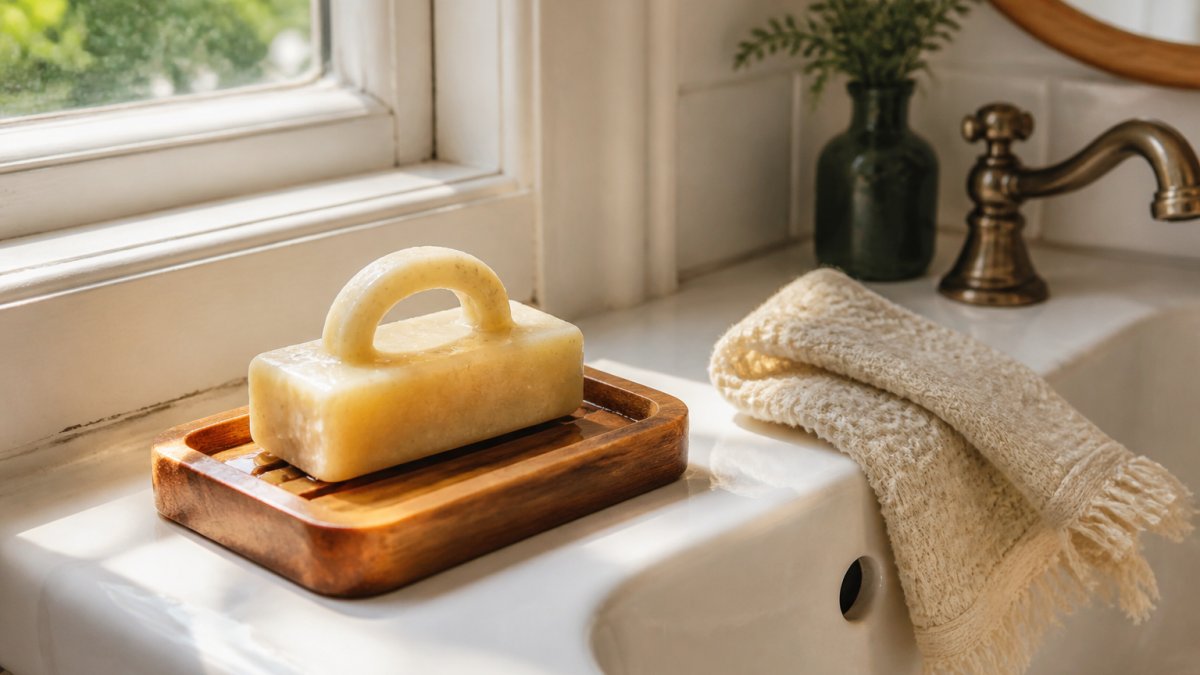
- Let the bar drain. Standing water dissolves soap faster than anything else. A ridged tray or a bar that hangs clear of the surface keeps it dry between washes.
- Cut bars in half for small hands. A smaller bar gets used up before it has time to go soft, and it fits a child's grip better.
- Keep the bar out of the shower spray. Store it at the edge of the tray, not directly under the stream.
- Use a draining dish, not a flat one. Flat ceramic dishes trap water underneath and turn the base to mush.
- Rotate two bars. Alternating gives each bar time to dry fully between uses.
- Store spares somewhere dry. A cupboard, not a steamy bathroom shelf.
The design of the bar matters here as much as your habits. If slipping and dropping is your main frustration, our guide on how to stop dropping soap in the shower walks through seven methods that work with any bar.
Matching a Bar to Your Skin Type and Use Case
The right bar depends on three things: your skin, who is using it, and where it lives in the house. A bar that suits a shared shower may not suit a face, and a bar built for sensitive skin may not deliver the lather someone expects from a body wash. Use the guide below to match performance to your needs.
Sensitive or dry skin. Look for short ingredient lists built on plant oils and natural butters, with no added fragrance. If your skin reacts to most products, our guide to natural soap for sensitive and dry skin goes deeper on what to look for.
Oily or combination skin. A bar with a slightly higher cleansing power, such as one built on coconut oil, can help manage excess oil without stripping.
Children. Bar size and grip matter more than anything else.
Reduced grip strength. A built-in handle removes the need to grip a wet, slippery bar at all.
Shared bathrooms. A mild, unfragranced bar suits most people in the house, which avoids buying three different products. Keep a separate, gentler bar for face use if anyone in the household has reactive skin.
Scent. Essential oils give natural scent without synthetic fragrance compounds. If you want scent, choose one built on essential oils; if you want none, choose unscented and check the ingredient list for masking fragrances.
Body vs. face vs. hands. Body bars can be more cleansing and are designed for larger areas. Face bars should be milder and fragrance-free where possible.
Shop the Handlers for a Slip-Free, Waste-Free Wash
Buying sustainable soap bars online comes down to a short list: verifiable ingredients, honest packaging, small-batch production, and a bar you will actually finish. Everything else is marketing.
Our handled bars are made in a woman-run workshop in India, in small batches, from all-natural ingredients with no synthetic attachments and no plastic.
Browse the full range of soap handlers to find your shape and scent. Pricing depends on the bars and bundle you choose, and you will see current prices on each product page.
Frequently Asked Questions
What makes a soap bar sustainable?
A sustainable soap bar combines several factors: natural or organic plant oils and butters, small-batch or cold-process production, and packaging that is plastic-free, recyclable or compostable. Palm oil sourcing matters too, so look for a stated policy on sustainable sourcing. Vegan and cruelty-free claims should be backed by a certification you can verify. The bar should also last long enough that you are not replacing it constantly, since longevity is part of the environmental impact.
Are bar soaps more eco-friendly than liquid soap?
Usually, yes. Bar soap needs no plastic bottle, ships lighter, and typically contains less water than liquid soap. That cuts packaging waste and transport emissions. The advantage grows when you choose zero waste soap bars with paper or compostable wrapping and use the whole bar rather than tossing slivers. Liquid soap still works for some routines, but if packaging and shipping lifecycle matter to you, a solid bar is the simpler choice.
How can I tell whether a soap bar is cruelty-free or vegan?
Check the ingredient list for animal-derived ingredients such as tallow, lanolin, honey or beeswax, which rule out a vegan claim. For cruelty-free, look for a recognised certification logo rather than a self-declared claim on the label. A maker who lists certifications openly and answers ingredient questions is easier to trust. If a listing only says natural without naming what is inside, treat the vegan and cruelty-free claims as unverified until you confirm them.
How long does one bar of soap actually last?
Bar life depends on size, how often you wash, and how the bar is stored. A bar kept dry between uses lasts noticeably longer than one sitting in a puddle on the dish. Handled designs and draining trays both help, because the bar dries evenly instead of dissolving at the base. To make soap bars last longer, store them away from direct spray, let them air dry, and use the whole bar rather than discarding the last sliver.
The challenge is simple: most soap gets wasted, not because people are careless, but because the bar was designed to slip, soften and shrink. The Soap Handler solves that with a built-in handle, all-natural ingredients, small-batch production and plastic-free design, so every bar gets used to the end. Get started with The Soap Handler and turn a daily routine into a slip-free, waste-free wash.