Luxury Bar Soap: Why a Handled Bar Is Worth It
Last Updated: November 4, 2026
Quick Summary
Luxury bar soap is judged mainly by how it feels on skin, how much of it gets used, and whether it leaves skin comfortable rather than tight. Those qualities come from the base oils, the manufacturing method and the bar's pH, not packaging alone. Handled designs like those from The Soap Handler keep the last piece of a luxury bar secure and usable.
- Feel on skin is decided by chemistry: oils, manufacturing method and pH matter more than packaging.
- Shea butter gives a dense, low-slip lather and a soft after-feel, which suits dry skin.
- Triple-milled bars are denser and longer-lasting, while cold-processed bars keep natural glycerin but wear faster.
- True soap is alkaline, around pH 9-10, so tightness after washing is worth checking against superfat level.
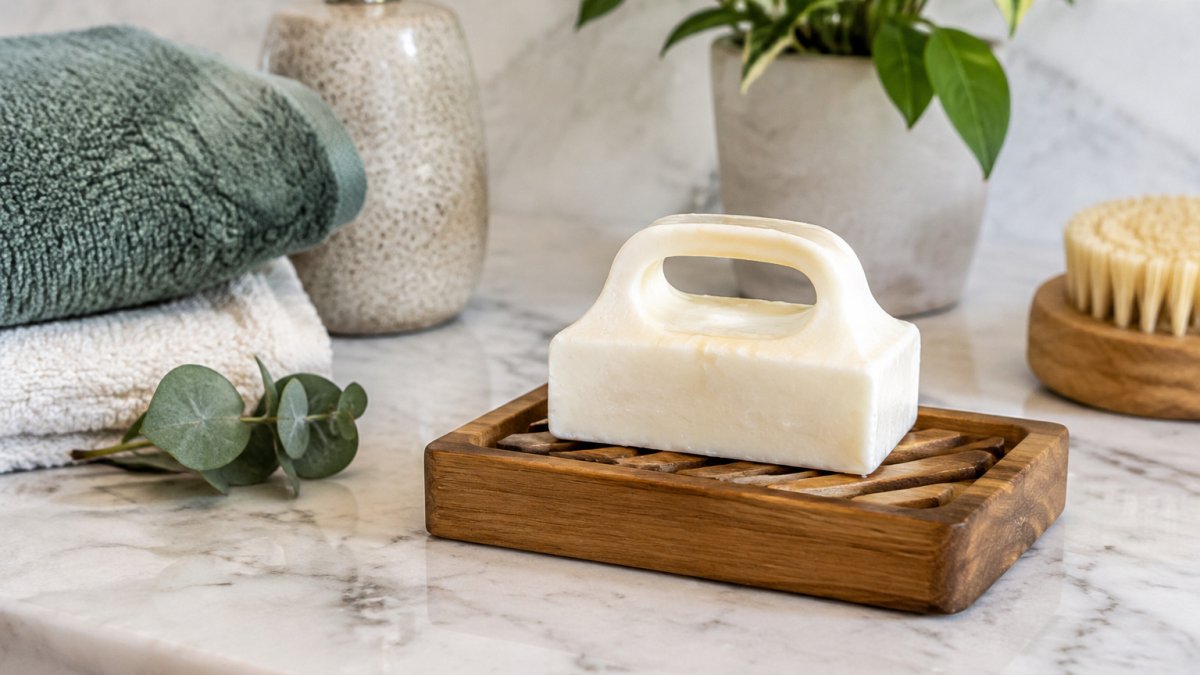
- A handled bar lets you use the soap down to the last piece, so less is wasted.
Table of Contents
- What Makes a Bar Soap Feel Luxurious
- How We Chose These Handled Bars
- Comparing the Six Soap Handlers
- Artisanal Soap Benefits Worth Paying For
- Finding the Best Smelling Luxury Bar Soap for Your Bathroom
- How to Store Bar Soap So Every Bit Lasts
- Picking Your First Handled Bar This Week
- Frequently Asked Questions
Luxury bar soap is more than a pretty bar on the sink. For most people, the difference shows up in how the bar feels in the hand, how much of it gets used, and whether the cleansing leaves skin comfortable. The Soap Handler makes all-natural bars with a built-in handle, so the last sliver stays usable and the soap is easier to keep hold of. Below, we explain what makes a bar feel luxurious and compare the six handled designs we offer.
What Makes a Bar Soap Feel Luxurious
A luxurious bar soap is one that lathers well, rinses clean and leaves skin feeling comfortable rather than tight. Those qualities come mostly from the ingredients, the manufacturing method and the bar's pH, not from packaging alone.
The oils and butters behind the feel. The fatty-acid profile of the base oils determines whether a bar feels creamy, cleansing or conditioning. Common luxury bases include:
- Shea butter, rich in stearic and oleic acids, it produces a dense, low-slip lather and leaves a soft after-feel, which is why it appears in many dry-skin bars.
- Argan oil, high in oleic and linoleic acids plus vitamin E; it is light rather than heavy, so it suits bars meant for normal to combination skin.
- Jojoba oil, technically a liquid wax ester close to human sebum, so it spreads easily and is often used to soften the tight feeling some soap bases leave behind.
- Olive oil, gives a gentle, low-lather bar that is mild but can feel slippery until fully cured.
- Coconut oil, produces big, quick lather and strong cleansing, but at high percentages it can strip skin; luxury formulators usually pair it with a conditioning butter to balance it.
Why the manufacturing method matters. Triple-milled soap is made by passing the soap base through steel rollers several times, which removes excess water and air and produces a denser, longer-lasting bar with a finer lather.
The pH question most guides skip. True soap is alkaline, typically around pH 9-10, because it is a salt of a fatty acid. That alkalinity is what cleans, but it can also disrupt the skin's acid mantle, the slightly acidic film (around pH 4.5-5.5) that helps keep the barrier intact.
Lather, scent and usability. A dense, creamy lather that glides over the skin signals a balanced formula; thin, squeaky lather often means a high-coconut, low-superfat bar. Fragrance should be pleasant without being overpowering, and essential oils behave differently from synthetic fragrance, they fade faster and can vary batch to batch.
How We Chose These Handled Bars
We built our range around one practical idea: a bar should be easy to hold, easy to use and easy to finish. Every design in our lineup has a handle that keeps the soap secure in wet hands, which matters for children, for anyone with reduced grip strength and for anyone who has ever chased a bar across the bathroom floor.
We also looked at size, shape and how each bar fits into a bathroom. Some handlers are compact and simple, some offer a wider base or a textured surface, and some are designed to stack. The goal was a range that covers different needs without asking you to give up the handle.
Comparing the Six Soap Handlers
Our six handled designs share the same natural ingredients and the same built-in handle. They differ in shape, texture and footprint. Here is a quick summary of how they compare:
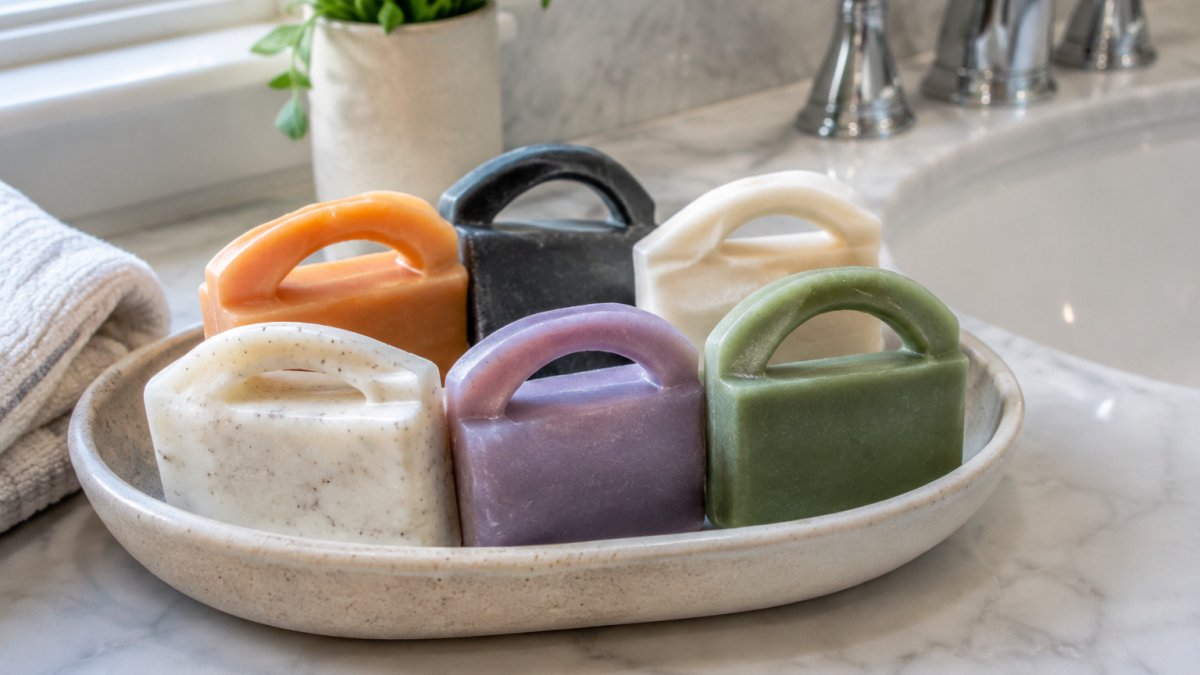
| Handler | Starting Price | Size (L x W x H) | Best For |
|---|---|---|---|
| The Clean Stamp | $7.00 | Not listed | Everyday simple cleansing |
| The Sliced Handler | $7.00 | Not listed | Clean, geometric look |
| The Clean Sweep | $9.00 | 85 x 50 x 45 mm | Wider base and firm grip |
| The Exfoli-Handler | $9.00 | 85 x 50 x 45 mm | Gentle exfoliating texture |
| The Stackable | $9.00 | 85 x 50 x 45 mm | Saving counter space |
| The Classic Clean | $9.00 | 85 x 50 x 60 mm | Maximizing use with the largest bar |
The Clean Stamp and The Sliced Handler: Simple Everyday Pick
Both of these are our most straightforward options. The Clean Stamp is our flagship handler, built around simplicity and pure cleansing, and its built-in handle ensures a secure grip in slippery conditions. Its product page lists the full details and purchase options. It is a sensible default if you want one bar that just works.

The Sliced Handler takes a more geometric, no-frills approach, with clean, smooth cuts. You can view its full product page to see the design up close. Because you can choose your favorite scents, it also works well if you want a set of bars in different fragrances around the house.
The Clean Sweep and The Classic Clean: Wider Bases and Presence
The Clean Sweep is built for a smooth, savvy soaping experience. Its wide base and firm-grip handle are designed for a secure feel, and it measures 85 x 50 x 45 mm. It suits anyone who wants a bar that feels substantial in the hand.
The Classic Clean is our largest handler, at 85 x 50 x 60 mm. If you want to get the most use from one bar, this is the one to choose. Its shape also looks good on a counter, so it doubles as a bathroom accent.
The Exfoli-Handler and The Stackable: Texture and Space
The Exfoli-Handler is designed for a gentle exfoliating routine. Its product page shows the textured surface and how each side is used. It is a two-in-one bar: one side has an exfoliating surface for removing dead skin cells and refreshing the skin, and you flip it over to use the smooth side for a regular wash.

The Stackable solves a different problem. Its product page shows the stacking design and available options. Its design lets you stack several bars together, which saves counter space and reduces clutter. It also adds a clean, modern look to the bathroom.

Artisanal Soap Benefits Worth Paying For
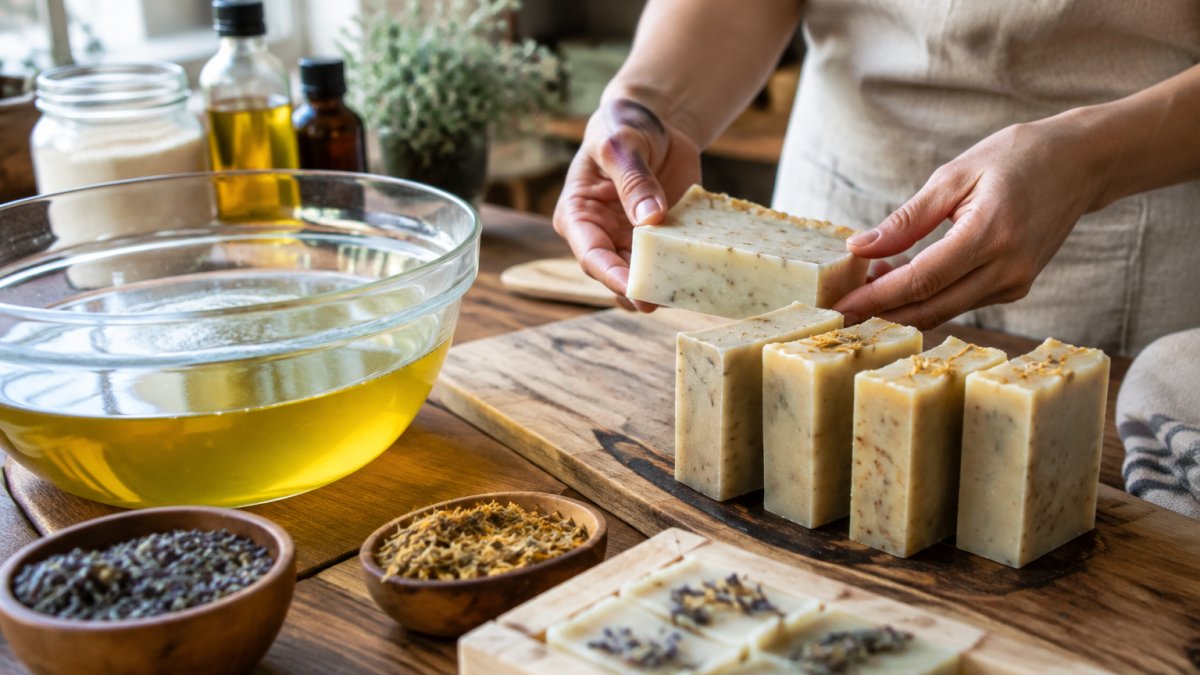
Handmade, small-batch soap is made in smaller runs than mass-produced bars, which allows closer attention to ingredients and finishing.
The value case comes down to a few practical points. A handled bar lets you use the soap down to the last piece, so less is wasted. Natural ingredients and sustainably sourced palm oil appeal to buyers who care about what touches their skin and where it came from. And a well-made bar is a daily item that feels more pleasant to use than a cheap one, which is a small but real benefit when it happens every morning.
If you are comparing prices, weigh the bar against how long it lasts and how much of it you actually use. You can explore wholesale and bulk purchasing options if you plan to stock up. A bar that gets used to the very end can cost less per wash than a cheaper bar that breaks apart or slips away.
Finding the Best Smelling Luxury Bar Soap for Your Bathroom
Scent is personal, so the best approach is to pick a fragrance you enjoy every day, but "enjoy" is easier to judge when you understand how soap fragrance is built.
Scent families to choose from. Grouping fragrances by family makes it easier to match a bar to a mood and a bathroom:
- Citrus and fresh, bergamot, lemon, grapefruit, litsea cubeba; bright and morning-friendly, but the shortest-lived on skin.
- Herbal and green, lavender, rosemary, lemongrass, tea tree; clean and often chosen for shared bathrooms.
- Floral, rose, geranium, jasmine, ylang-ylang; richer and better suited to evening routines.
- Woody and earthy, cedarwood, sandalwood, vetiver, patchouli; the longest-lasting family and a common base for men's bars.
- Warm and resinous, vanilla, benzoin, frankincense, amber; comforting in winter and in small bathrooms where a little goes a long way.
Aromatherapy versus fragrance. Essential oils are the aromatic compounds distilled from plants, and some, lavender, chamomile, citrus, are used in aromatherapy for relaxation or alertness. Their effect is subtle and personal, not clinical.
Match scent to skin type and season. Dry or sensitive skin does best with softer, resinous or floral blends paired with conditioning butters, because sharp citrus and high-coconut bars can feel more stripping. Oily skin often suits herbal and citrus bars.
Hard water changes how scent and lather behave. In hard water, the calcium and magnesium ions react with soap to form insoluble soap scum, which reduces lather and can leave a film that mutes fragrance on skin.
The Sliced Handler lets you choose your favorite scents to build a personalized pack.
How to Store Bar Soap So Every Bit Lasts
Storage makes a noticeable difference to how long a bar lasts. Keep your soap on a draining dish rather than in a puddle of water, because standing water softens the bar and speeds up wear. Let it dry between uses.
If you stack bars, leave a little space around each one so air can circulate. The Stackable is built for this, but the same principle applies to any handled bar on a shared dish. A dry, ventilated spot in the bathroom helps the bar last from the first use to the last sliver.
Picking Your First Handled Bar This Week
If you are new to handled soap, start with one bar that fits your main need. For a simple everyday choice, The Clean Stamp is a reliable place to begin. If you want the most use from a single bar, The Classic Clean is the largest option. For a bathroom with limited counter space, The Stackable is the practical pick.
Try one bar for a couple of weeks, notice how it feels and how quickly it wears down, and then decide whether to add a second design or a different scent. Shop the Handlers on our site to find the one that fits your routine.
Frequently Asked Questions
What is the most luxurious bar soap?
There is no single objective winner, because luxury in a bar soap comes from ingredients, scent, and how the bar feels in use. Among The Soap Handler's range, The Classic Clean is the largest bar at 85 x 50 x 60 mm, so it gives the most soap per use and the most presence on the counter. Pick by what matters to you: the Exfoli-Handler for a gentle exfoliating wash, or the Clean Sweep for a wide base that feels steady in the hand.
Are luxury bar soaps better for your skin than drugstore brands?
Better depends on your skin and the ingredients, not the price. The Soap Handler's bars are made with natural ingredients and pure essential oils and are free from harmful ingredients, with palm oil sustainably sourced. If you have sensitive skin, check the ingredient list for each bar and patch test a new soap before using it all over. Price alone does not tell you whether a bar will suit you.
How do you make a luxury bar soap last longer?
The built-in handle helps here, because you can use the bar down to its last piece without losing it to a slippery surface. The Stackable also helps you keep several bars dry and separate on a small counter.
What are the benefits of using artisanal, small-batch soap?
Small-batch artisanal soap is made in limited runs, which lets makers control ingredients and quality closely. The Soap Handler is a woman-run workshop in India producing all-natural bars with built-in handles, so each bar is made in small batches. The handle also means you can use the soap to the very last bit, which reduces the waste that comes from slivers washing down the drain.