How to Understand Why Artisanal Soap Costs More
Last Updated: November 5, 2026
Quick Summary
Artisanal soap costs more because it is produced in small batches with hands-on labor, quality ingredients, and weeks of curing, while commercial soap is mass-produced for volume and low unit cost. Small makers buy ingredients in smaller quantities and absorb setup costs across far fewer bars, so labor and ingredients drive the price.
- Small-batch production means a maker produces a limited number of bars at once, often by hand.
- Cold-process soapmaking combines oils and a lye solution at low temperature, then cures over time.
- Price per ounce is the honest way to compare an artisanal bar with a commercial bar.
- A longer cure produces a harder, longer-lasting bar with milder lather.
- Look for a full ingredient list, the production method, and cure time stated in weeks.
Table of Contents
- The Real Reasons Artisanal Soap Costs More Than You Expect
- Small-Batch Production vs Mass Manufacturing
- Labor, Hands-On Time, and the Cold-Process Method
- Artisanal Soap vs Commercial Soap: A Fair Like-for-Like Comparison
- Handmade Soap Ingredients and Why Sourcing Drives the Price
- How Long Does Handmade Soap Last? Curing, Shelf Life, and Value
- How to Evaluate Quality Claims Before You Buy
- What Makes the Best High-Quality Bar Soap Worth the Price
- Choosing Your Bar: What to Look For at The Soap Handler
- Frequently Asked Questions
The Real Reasons Artisanal Soap Costs More Than You Expect
Pick up a bar of supermarket soap and a bar of artisanal soap, and the price gap can feel hard to justify. The difference comes down to how each bar is made: artisanal soap is produced in small batches with hands-on labor, quality ingredients, and weeks of curing, while commercial soap is mass-produced for volume and low unit cost. This guide breaks down where the cost of a handmade bar comes from, so you can judge value instead of guessing.
Below, we'll show you the cost math behind a handmade bar, how to compare bars fairly by weight and ingredients, and how to tell a quality claim from marketing noise.
Small-Batch Production vs Mass Manufacturing
Small-batch production means a maker produces a limited number of bars at once, often by hand, rather than running thousands of units through automated lines. That single fact drives most of the price difference.
Mass manufacturers buy raw materials in bulk, run continuous production, and spread fixed costs like machinery and facilities across enormous volumes. Economies of scale push the cost per bar down. A small workshop does the opposite: it buys smaller quantities of oils and butters, mixes each batch by hand, and absorbs the same setup costs across far fewer bars. Every batch carries its own overhead, and that overhead lands in the retail price.
What most guides miss is that batch size also affects consistency and waste. A maker working in small batches can adjust a recipe, test a cure, and correct problems quickly, but each adjustment costs time. That flexibility is a feature you pay for, not a flaw.
Labor, Hands-On Time, and the Cold-Process Method
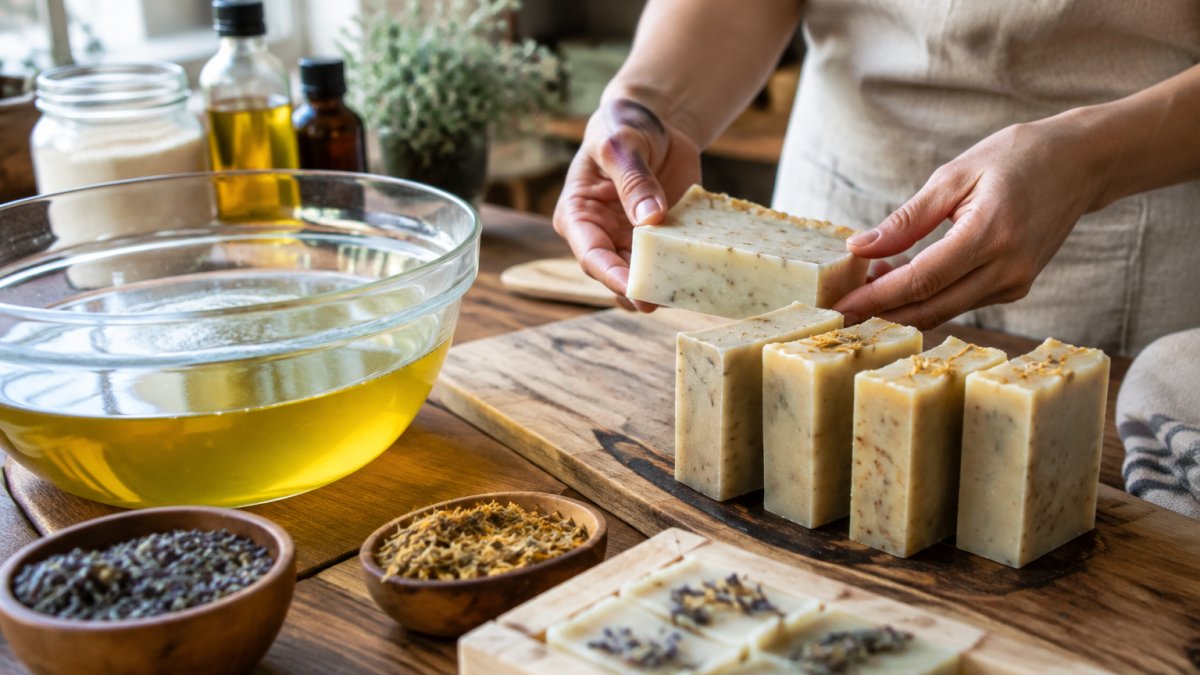
Cold-process soapmaking is a method where oils and a lye solution are combined at low temperature, poured into molds, and left to saponify and cure over time. It is labor-intensive from start to finish.
Each step needs a person, not a machine. A common mistake buyers make is assuming the maker's margin is huge because the bar looks simple. In practice, the hours of hands-on work per batch are the largest hidden cost in a handmade bar.
Artisanal Soap vs Commercial Soap: A Fair Like-for-Like Comparison
A fair comparison between artisanal soap and commercial soap starts with weight and ingredients, not sticker price. Commercial bars are often milled and pressed with fillers and synthetic detergents, while artisanal bars often retain natural glycerin and use oils and butters as the base.
| Feature | Artisanal Bar | Commercial Bar |
|---|---|---|
| Production | Small batches, by hand | Mass production lines |
| Base | Natural oils and butters | Often synthetic detergents and fillers |
| Glycerin | Retained in the bar | Frequently removed and sold separately |
| Curing | Weeks of air curing | Minimal to none |
| Packaging | Often plastic-free | Often plastic film or wrap |
| Cost driver | Labor and ingredients | Volume and automation |
Bar Size, Cost per Ounce, and What You Actually Get
Price per ounce is the honest way to compare. A larger artisanal bar that lasts longer can cost less per wash than a cheap bar that dissolves in a week. Check the net weight, then divide the price by the ounces. Do the same for the commercial bar.
Handmade Soap Ingredients and Why Sourcing Drives the Price
Handmade soap ingredients cost more because quality sourcing is expensive, and the gap is larger than most buyers realize. Natural oils, butters, colorants, and fragrance oils or essential oils vary in price by harvest, region, grade, and supplier scale, and small makers cannot lock in bulk rates the way factories can. The result is that ingredient cost per bar can swing widely from one production run to the next, even when the recipe stays the same.
Natural Oils, Butters, Colorants, and Fragrance Costs
- Olive oil gives a gentle, conditioning bar but costs more than commodity tallow or palm oil; extra-virgin grades cost more still and carry a stronger scent that can compete with fragrance
- Coconut oil adds cleansing lather and is widely used in cold-process recipes, but its price moves with global crop cycles and shipping costs
- Butters such as shea or cocoa add richness and raise the ingredient cost; unrefined shea carries a nutty aroma that some makers prefer and others neutralize
- Colorants range from clays and botanicals to micas, each with its own price; botanical colorants often fade over time, which affects how a maker plans a batch
- Essential oils cost far more than synthetic fragrance and are used at low percentages; a single popular essential oil can cost more per ounce than several pounds of base oil
Ingredient price volatility matters too. When a harvest is poor or demand spikes, oil prices move, and a small maker absorbs that swing because they buy in smaller quantities and cannot renegotiate contracts the way a factory can. A common pattern is that a maker's ingredient cost per bar rises in a bad harvest year while the retail price stays fixed, which squeezes margin rather than passing the full increase to the buyer. That is one reason artisanal soap prices can look inconsistent across makers and seasons.
Grade and sourcing also matter. A refined oil is cheaper but has fewer trace minerals and a neutral scent; an unrefined or cold-pressed oil costs more and behaves differently in the recipe. Fair-trade or organic certification adds a paper trail and a premium. If you want a deeper look at gentle formulations, our guide to natural soap for sensitive dry skin covers what to look for.
How Long Does Handmade Soap Last? Curing, Shelf Life, and Value
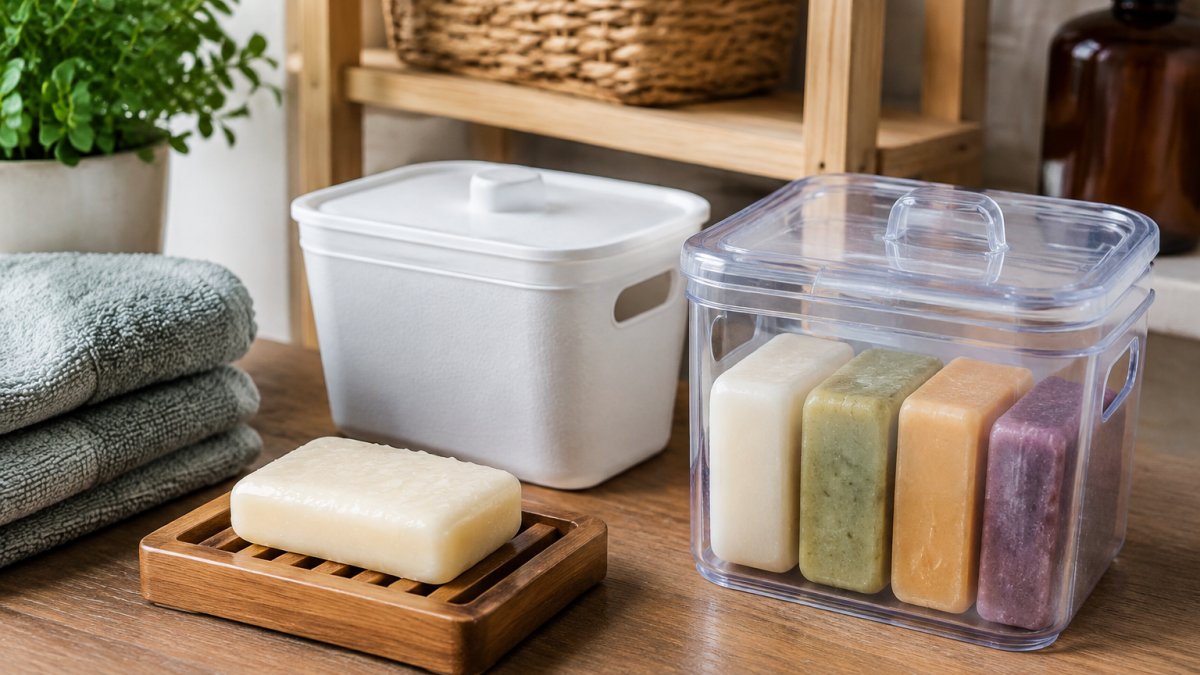
Handmade soap lasts longest when it is kept dry between uses, and a well-cured bar can stay usable for many months.
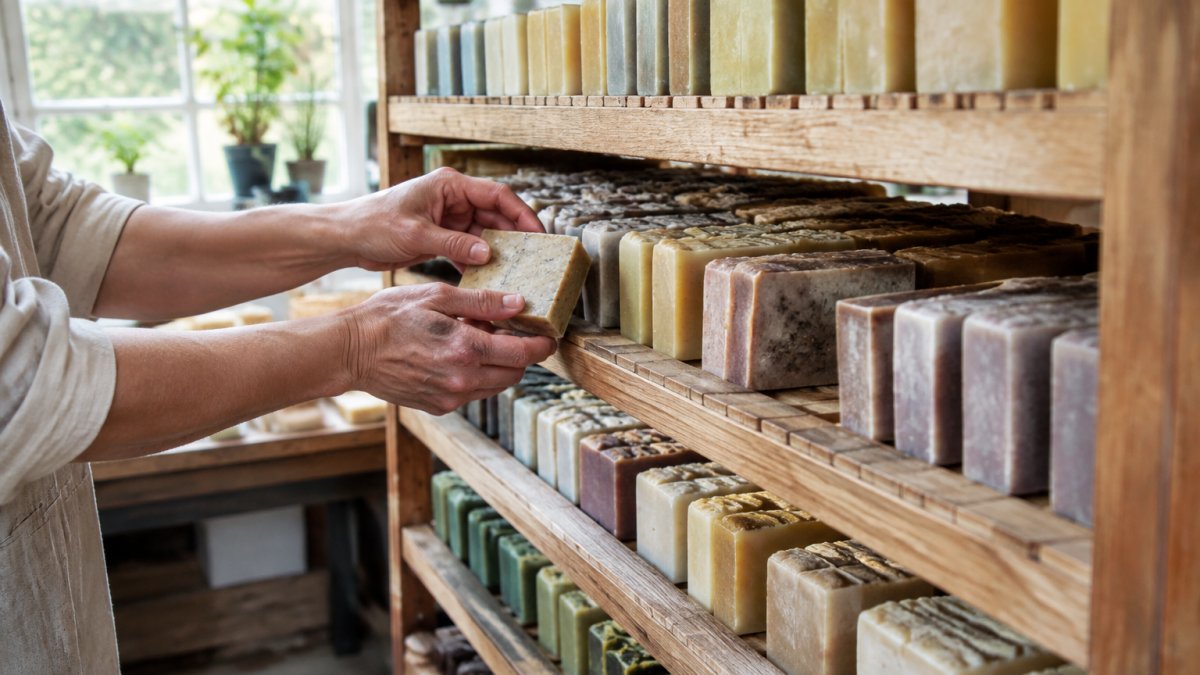
Cure time is also a cost that buyers rarely see, because a bar must sit and harden before it can be sold, and that delay is built into the price.
Value over time is where curing pays off. A hard, well-cured bar resists dissolving, so it delivers more washes. If you want to stretch every last sliver, our tips on using every soap sliver help you get full value from a pricier bar.
Shelf life is not unlimited, though. Natural oils can go rancid over time, and essential oils fade, so a bar stored in a humid bathroom for a year may smell different than a fresh one.
How to Evaluate Quality Claims Before You Buy
Quality claims are only useful when they are specific and checkable. Vague phrases like "all-natural" carry little weight on their own, so look for a full ingredient list, the method used, and how long the bar is cured.
Use this checklist before you buy:
- Full ingredient list published, not just a highlights list
- Production method named, such as cold-process
- Cure time stated in weeks
- Net weight shown in ounces or grams
- Sourcing details for key oils or butters
- Packaging described as plastic-free where claimed
- Clear guidance on storage and shelf life
Watch out: a bar that lists only "natural fragrance" without an ingredient breakdown gives you nothing to verify, and that is often where cheap fillers hide. For a practical walkthrough of matching a bar to your skin, see our guide on choosing the best bar soap.
What Makes the Best High-Quality Bar Soap Worth the Price
The best high-quality bar soap earns its price through retained glycerin, quality oils, a full cure, and a design that reduces waste. Glycerin is a natural byproduct of saponification and a humectant that helps skin hold moisture; mass producers often remove it to sell separately, while artisanal makers leave it in the bar.
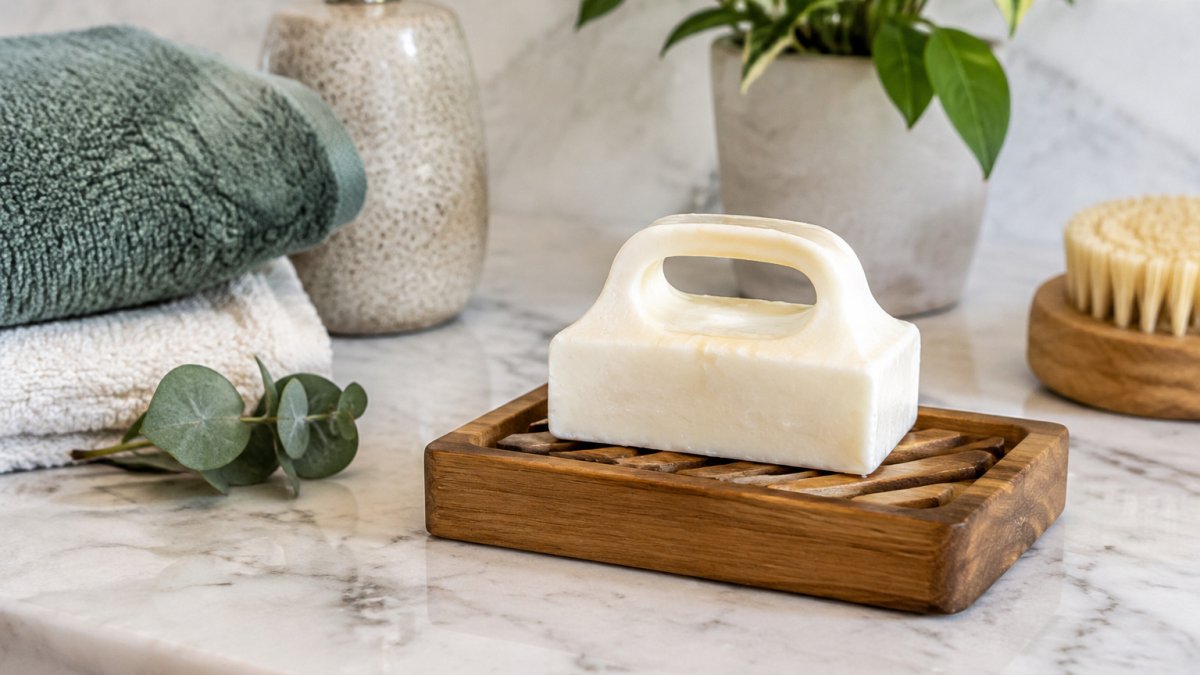
Design matters as much as chemistry. At The Soap Handler, our bars are made in small batches with a built-in handle, so the bar stays slip-free in wet hands and can be used down to the very last bit. Our woman-run workshop in India produces bars with all-natural ingredients and no synthetic attachments or plastics.
If you are weighing whether a handled bar is worth it, our article on why a handled bar is worth it makes the case in more detail. As customer Jane M. puts it, "This soap is slip free, nifty, and such fun to use."
Choosing Your Bar: What to Look For at The Soap Handler
Choosing the right bar comes down to four things: ingredients you can read, a cure you can trust, a weight that delivers value, and a shape that survives daily use. The Soap Handler offers kid-friendly options and a slip-free handle that makes bath time easier for children and for adults with reduced grip strength.
Here is how we would choose:
- Match the base oils to your skin, favoring gentle oils for dry or sensitive skin
- Confirm the cure time and net weight before comparing price
- Pick a shape that drains and dries well between uses
- Check the packaging if plastic-free matters to you
If you are ready to buy sustainable bars online, our step-by-step guide on buying sustainable soap bars online walks you through it.
Frequently Asked Questions
Why is handmade soap more expensive than commercial soap?
Handmade soap costs more because it is made in small batches with hands-on labor, higher-quality ingredients, and a curing period of several weeks before it can be sold. Commercial soap is mass-produced with economies of scale, cheaper fillers, and faster manufacturing timelines. The price difference reflects real production costs: quality oils and butters, essential oils or fragrances, colorants, packaging, and the time a maker spends on each batch. You are paying for the process and the ingredients, not just the bar.
Is artisanal soap worth the extra cost?
Whether artisanal soap is worth it depends on what you value. If you want a bar made with quality ingredients, retained glycerin, and no synthetic detergents, the higher price reflects those choices. Artisanal bars also tend to last well when cured properly, so cost per use can be reasonable. Compare bar sizes and cost per ounce rather than sticker price alone. If you have sensitive skin or want to reduce plastic waste, a well-made artisanal bar often delivers more value than a cheap supermarket bar.
How long does handmade soap last compared to commercial soap?
A properly cured handmade soap bar can last well with daily use, and denser bars generally dissolve more slowly than bars with fillers. Storage matters too: keep your bar dry between uses and it will last longer. Check the maker's recommended use-by guidance for storage and shelf life.
What makes a bar of soap high quality?
High-quality bar soap usually has a short, readable ingredient list: natural oils like olive, coconut, or palm oil, butters such as shea, and essential oils or skin-safe fragrances. Bars that retain glycerin, a natural byproduct of saponification, can feel gentler on skin. A well-cured bar generally lasts longer in the shower. Look for transparent labeling, a maker who explains their process, and a bar that holds its shape rather than dissolving quickly. These signals separate quality bars from mass-produced ones.
The real test of an artisanal bar is not the sticker price but the cost per wash and how it treats your skin. The Soap Handler makes that calculation easy with small-batch, all-natural bars that feature a built-in handle for a slip-free grip, no synthetic attachments or plastics, and a design that uses every last sliver. Get started with The Soap Handler and turn a simple daily wash into a slip-free, waste-free routine.