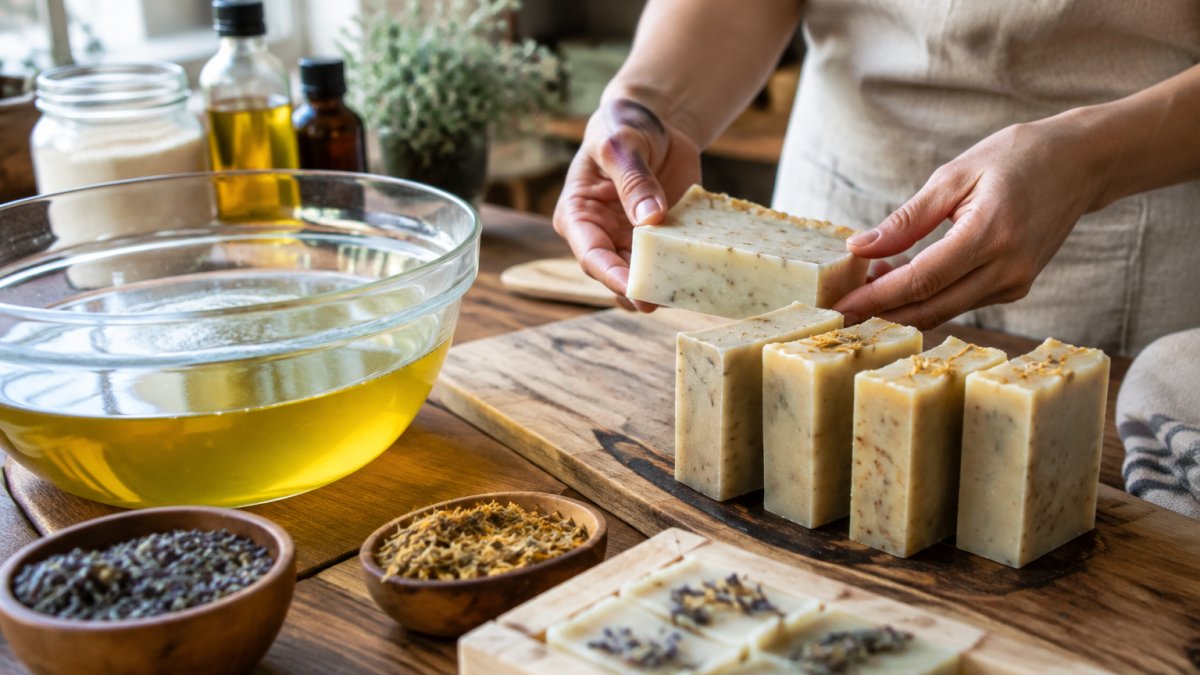
Article: How to Keep Soap From Melting: 7 Storage Fixes That Work
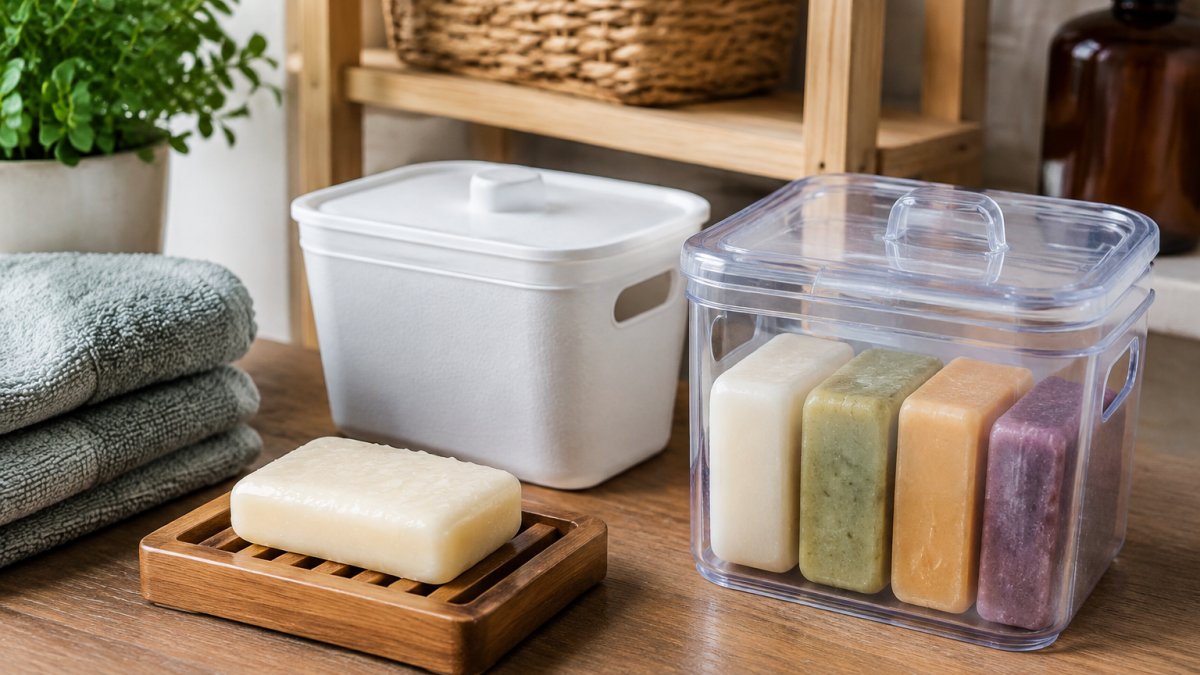
How to Keep Soap From Melting: 7 Storage Fixes That Work
Last Updated: November 6, 2026
Quick Summary
To learn how to keep soap from melting, control water contact, airflow, and heat by moving the bar out of the direct shower spray, setting it on a dish that drains, and letting it air-dry between uses. Rotating two bars gives each one a full day to dry, and storing spares in a cool, dry place prevents softening.
- Melting makes a bar sticky and pliable, while dissolving shrinks it evenly as water washes it away.
- Hard oils like coconut and palm create a firmer bar than soft oils like olive oil.
- Shake off excess water and set the bar on its edge or a raised dish so air reaches all sides.
- Pack travel bars in a breathable cotton, linen, or mesh pouch instead of a sealed plastic bag.
- Weigh your bar weekly on a kitchen scale; a sudden drop of more than 15% signals standing water or direct spray.
Table of Contents
- Why Your Bar Soap Melts, Softens, and Disappears Fast
- The Best Way to Store Bar Soap in the Shower
- Step-by-Step Fixes to Stop Soap Melting
- Draining Soap Dishes and Soap Savers Compared
- How to Store Bar Soap Without a Soap Dish
- How to Store Bar Soap for Travel and Outdoor Heat
- Measuring Whether Your Fix Actually Works
- Choosing a Handled Bar That Lasts Longer
- Frequently Asked Questions
Why Your Bar Soap Melts, Softens, and Disappears Fast
A bar of soap that turns to mush in a week is not a soap problem. It is a water problem. Learning how to keep soap from melting comes down to controlling three things: water contact, airflow, and heat.
Here is the short version: soap melting is the loss of a bar's structure when water sits on its surface and heat softens it faster than air can dry it.
Melting vs. Dissolving: How to Tell Which Problem You Have
These two problems look alike but need different fixes.
- Melting happens when heat softens the bar. It feels sticky, bends under your thumb, and leaves a gooey film.
- Dissolving happens when water washes the bar away. The bar shrinks evenly and looks worn down.
- Softening sits between them. The bar stays whole but turns squishy and pale.
Check your bar after a shower. Sticky and pliable means heat. Soggy and smaller means water. Many bars suffer both at once, which is why one fix rarely solves it all.
Why Some Soap Bars Hold Up Better Than Others
Not all bars are built the same. A hard, well-cured bar lasts far longer than a soft one, and the ingredients tell you a lot.
- Hard oils like coconut and palm create a firmer bar.
- Soft oils like olive oil make a gentler bar that dissolves faster.
- Curing time matters. A bar left to dry for weeks loses water weight and hardens.
If you make your own soap, a longer cure is the safest way to get a harder bar. Skip the temptation to overload a recipe with hardeners; small changes go a long way.
The Best Way to Store Bar Soap in the Shower
The best way to store bar soap in the shower is to keep it dry, drained, and out of the spray.
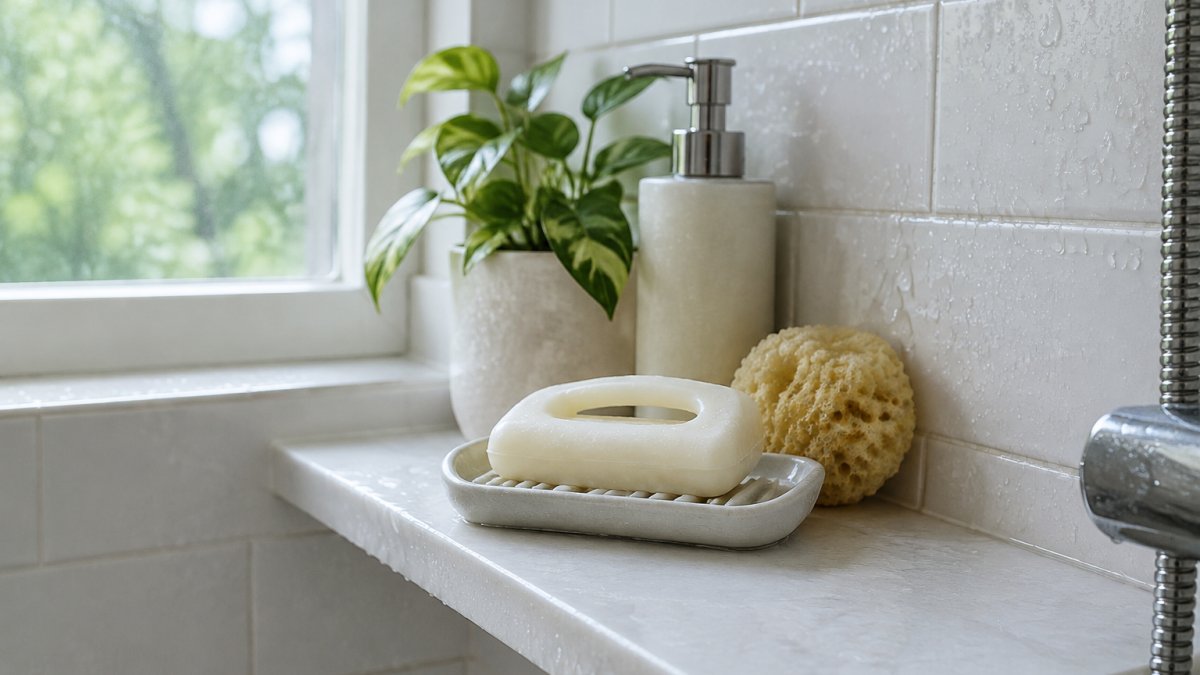
Placement matters. A shelf at the far end of the shower keeps the bar out of the direct spray, and water that never lands on the bar cannot dissolve it.
Small habits add up here.
Step-by-Step Fixes to Stop Soap Melting
These seven fixes work in order of impact. Start at the top, and most bars will last noticeably longer within a week.
- Move the bar out of the direct water stream.
- Switch to a dish that drains.
- Let the bar air-dry between uses.
- Rotate two bars so each one dries fully.
- Keep the dish clean and free of standing water.
- Store spare bars in a cool, dry place.
- Match the bar type to the setting.
Keep Bars Out of the Direct Water Stream
The single biggest win is placement. A bar sitting under the showerhead gets soaked with every use, whether or not anyone touches it.
Move it to the back of a shelf or the far corner of a tub ledge. Even ten centimetres of distance from the spray makes a difference. If your shower has only one spot, angle the head away from the soap.
Let Bars Air-Dry Between Uses
A bar needs air on all sides to dry. Stack it against a wall or lay it flat on a solid dish, and the bottom stays wet for hours.
- Set the bar on its edge or on a raised dish.
- Leave space around it, not pressed against tile.
- Shake off excess water before setting it down.
Dry soap is hard soap. Wet soap is soft soap. That is the whole rule.
Rotate Two Bars to Double Bar Life
Two bars beat one. Use bar A today, then set it aside to dry while bar B takes over tomorrow.
Each bar gets a full day of airflow between showers. In practice, this simple switch gives each bar time to dry between uses, and it means you are less likely to run out mid-week.
Draining Soap Dishes and Soap Savers Compared
The right dish does one job: it gets water away from the bar. Here is how the common options stack up.
| Option | How It Drains | Best For | Watch Out For |
|---|---|---|---|
| Ribbed dish | Water falls through slots | Most showers | Slots clog with soap residue |
| Raised tray | Bar sits above a gap | Small shelves | Needs a lip to catch drips |
| Soap saver bag | Fabric wicks water away | Travel and gyms | Bag itself stays damp |
| Magnetic holder | Bar hangs in the air | Tight spaces | Needs a metal insert in the bar |
| Solid dish | Does not drain | Dry counters only | Pools water under the bar |
A draining dish is not a luxury. It is the difference between a bar that lasts and a bar that melts. Clean the dish weekly, because soap scum blocks drainage fast.
How to Store Bar Soap Without a Soap Dish
No dish? You still have options. The goal is the same: lift the bar, let air reach it, and keep water moving away.
- Use a clean sponge as a raised, absorbent base.
- Rest the bar on its edge against a small tile or pebble.
- Hang it in a mesh bag so air reaches every side.
A handled bar can help with the no-dish problem. The built-in handle gives your hand a firm grip, which is helpful for kids and for anyone with reduced grip strength. If space is tight, The Stackable lets you stack bars together and save counter room without a dish at all.

How to Store Bar Soap for Travel and Outdoor Heat
Heat is the enemy on the road, but the fix is not just "keep it cool." A bar left in a hot car or a sunny tent softens fast, then smears across everything it touches. The key is to control three variables: temperature, airflow, and moisture contact.
Packing for Transport
Pack bars in a breathable pouch, not a sealed plastic bag. A sealed bag traps moisture and turns the bar sweaty. Look for pouches made of cotton, linen, or mesh.
For car travel, keep the pouch out of direct sun and away from hot dashboards. The glove compartment can also get hot, so a shaded spot on the floor behind a seat is often better.
Outdoor Events and Camping
At festivals, campsites, or outdoor events, a handled bar is easier to manage than a slippery one. Our guide to soap bars for camping and travel covers which bars handle heat and humidity best.
Set up a drying station in shade: a mesh bag hung from a tree branch or tent loop works well.
Watch out: a bar stored in a hot tent for a full day can soften enough to lose its shape. Keep it in shade and let it air out before packing it away.
Returning Home
When you get home, unpack the bar and let it dry fully in a well-ventilated spot before storing it in a cabinet or linen closet. If the bar feels sticky or soft, give it a day on a draining dish before putting it back into rotation.
Measuring Whether Your Fix Actually Works
You cannot improve what you do not track. Most advice on keeping soap from melting is qualitative, "keep it dry", but a simple measurement turns guesswork into a testable system. Here is how to track bar lifespan and drying time without special equipment.
Track Bar Weight Weekly
Weigh your bar once a week on a kitchen scale and write the number down. Use the same scale and the same time of day (ideally after the bar has dried overnight) for consistency.
A common pattern is to see a 5-10% weight loss in the first week as excess moisture evaporates, then a steadier decline.
Measure Drying Time
After a shower, note how long it takes for the bar's surface to feel dry to the touch. A bar that stays tacky for more than an hour is not getting enough airflow. Try moving it to a spot with better air circulation or switching to a more draining dish. You can also test by pressing a dry tissue against the bar: if the tissue sticks or shows moisture, the bar is still wet.
Run One Change at a Time
Try one change at a time. Move the bar, then weigh again next week. If the number steadies, keep the change. If not, try the next fix. This turns guesswork into a simple test anyone can run. Keep a small log on your phone or a sticky note with the date, weight, and any changes you made.
Know When to Salvage
For bars that have already softened, our guide on using every soap sliver shows how to salvage what is left instead of tossing it. But prevention is cheaper: a bar that lasts twice as long cuts your soap spending in half. Use the weight log to compare bar types and storage setups, and you will quickly see which combination gives you the longest life.
Choosing a Handled Bar That Lasts Longer
A handled bar removes two problems at once: it keeps the soap off wet surfaces and it stops the bar from slipping out of your hand. That combination is why we built The Soap Handler around a built-in handle rather than a plastic clip.
Our soaps are made with natural ingredients and pure essential oils, and palm oil is sustainably sourced. Each bar has a built-in handle and no synthetic attachments.
For most bathrooms, The Classic Clean is our largest Handler, which makes it the best pick if you want to maximize use and get the longest life from one bar. If you prefer a wider base and a firm grip, The Clean Sweep is a solid everyday choice for adults and kids alike.

One honest note: a handled bar still needs airflow. The handle keeps it off the ledge, but a draining spot is what keeps it firm. Pair the bar with good storage and you get the full benefit.
Frequently Asked Questions
Why does my bar soap get soft and dissolve so quickly?
Most quick-wearing bars are losing the battle to water, not heat. A bar left in the direct water stream or sitting in a puddle absorbs moisture, softens, and washes away faster with every use. Fix the drainage first: a dish that lets water run off, a spot outside the spray, and air-drying between showers. Harder formulations with ingredients like sodium lactate or stearic acid also hold up longer than soft, high-glycerine bars.
What is the best way to store bar soap in the shower?
The best way to store bar soap in the shower is a draining dish placed out of the direct water stream, ideally at chest height or higher where splash is lighter. Angle it so runoff escapes rather than pooling under the bar. If your shower has no shelf, a hanging soap saver bag works. The goal is the same in every setup: air on all sides of the bar, water off it, and no standing water beneath it.
Can I store bar soap for travel without it turning to mush?
Yes. Let the bar air-dry completely before packing, then carry it in a ventilated soap case or a soap saver bag rather than a sealed plastic tub. If you must seal it, wrap it in a dry cloth first. On arrival, unpack it and let it dry before the next use.
Do soap saver bags really extend bar life?
A draining holder can help keep the bar off wet surfaces. It will not rescue a bar left in the spray, though. Pair any holder with a spot out of direct water flow and squeeze excess water out after each use for the best results.
Most people accept mushy soap as normal. It is not. A draining spot, a dry bar between uses, and a handle that keeps soap off the shelf will each add real life to every bar you buy.
Get started with The Soap Handler and give your soap a handle that keeps it dry, firm, and slip-free from the first shower to the last sliver.